On April 24, 2025, the final conference of The Missing Peace project took place in Berlin, marking the culmination of a nearly three-year transnational initiative focused on youth-led reconciliation and social cohesion in post-conflict societies.
With partners from Ireland – Glencree Center for Peace and Reconciliation, Germany – CGE Erfurt e.V., North Macedonia – European Cultural Epicenter Bitola, Lithuania – Varenos kulturos centras, Hungary – TEIS Foundation, and Cyprus – CitizensACT, the project aimed to develop innovative, grassroots strategies for empowering young people as key actors in peacebuilding processes. Over the course of the project, partners co-created research, capacity-building tools, and a comprehensive set of educational resources — including a methodological framework, a transferable youth reconciliation program, and an interactive e-mapping of youth organisations working in the field. In addition, selected tools and workshop methodologies were piloted in various local contexts, allowing for practical testing and adaptation to the specific needs of youth in different regions.
The conference, titled “Shared Space, Shared Future: A Multi-Level Approach to Youth-Led Reconciliation and Social Cohesion”, was not only a reflection on what has been achieved but also a space to look forward — toward replicable, sustainable impact. Through expert panels, youth-led discussions, and interactive workshops, it offered a deep dive into lessons learned and strategies for the future of reconciliation work.
The conference took place in an exciting venue: a festive hall of Refugio, a multicultural communal space established in the summer of 2015 by Berliner Stadtmission – Evangelische Kirche. Its unique vibe, warm and inviting atmosphere, as well as delicious culinary offers has supported the conference spirit.

Grounding Peace in Everyday Practices
The event was officially opened by Amina Moustafa, project coordinator from the Glencree Centre for Peace and Reconciliation, who welcomed participants and introduced the goals of the conference: to reflect on the project’s impact, share lessons learned, and inspire future action.
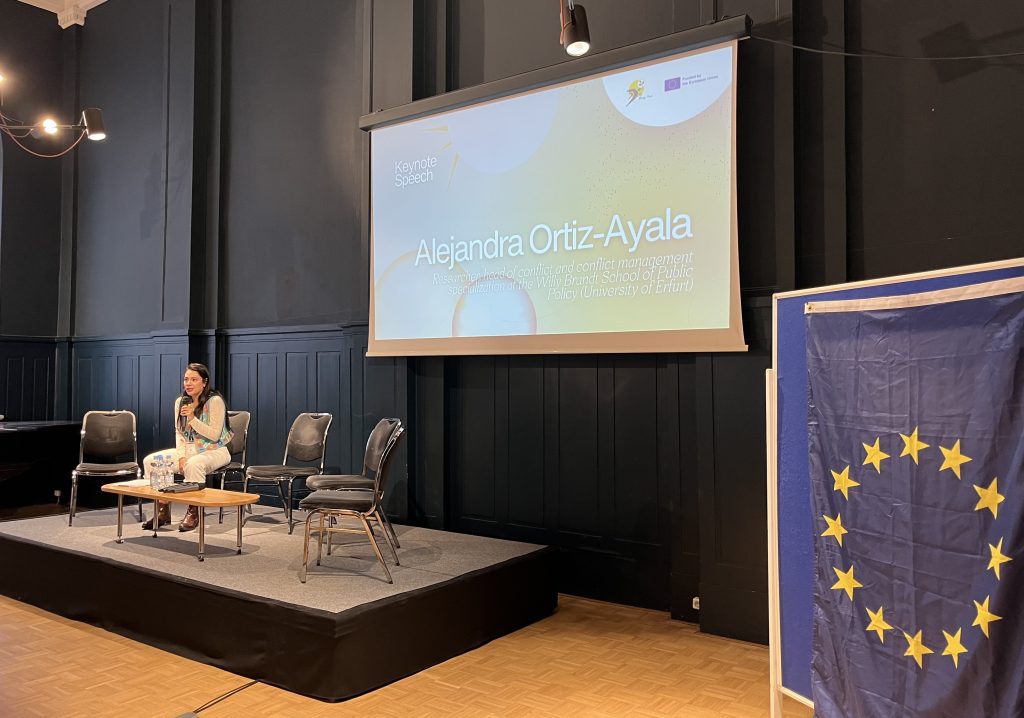
The first keynote speaker, Alejandra Ortiz-Ayala (Willy Brandt School of Public Policy, University of Erfurt), set the tone with a compelling reflection on everyday peacebuilding in a world marked by polarization, radicalization, and instability. She emphasized that reconciliation is not a single event, but a sustained process — one that requires courage, dialogue, and the willingness to confront history. Drawing on her research and personal experience, she illustrated how peacebuilding interventions must be strengthened with scientific rigor and rooted in daily life and local realities, not reserved for diplomatic tables alone.
“Local communities must be the ones to define what peace means for them.”
– Alejandra Ortiz-Ayala, PhD
Immediately after, Linda Sánchez led a lively Professional Experience Barometer, where participants were invited to reflect on their experiences in peacebuilding and reconciliation. Through movement and conversation, participants began forming connections and recognizing the diversity — and shared experiences — of their paths.


Photos: Nela Kłosiewicz
From Vision to Impact: Reflections from the Field
The first panel of the day, From Vision to Impact, brought together project managers and field practitioners from across partner organizations to reflect on the development, implementation, and outcomes of The Missing Peace. Moderated by Natalia Skorik (eSquare e.V.), the discussion focused on how a shared vision translated into practical actions on the ground.
The panel explored what it meant to work across different post-conflict contexts while trying to build a common framework for youth-led reconciliation. Participants discussed the motivation behind their involvement in the project, the concrete needs they aimed to address, and the importance of flexibility in adapting tools to local realities. While each organization brought its own perspective, all emphasized the value of co-creation, mutual learning, and long-term relationship-building.


Photos: Nela Kłosiewicz
Fishbowl Discussion “Youth, Peace, and Security: Strengthening Capacity for Lasting Impact”
A dynamic fishbowl discussion followed next, where participants tackled themes of positionality, privilege, and power. The initial input was given by the invited speakers: Bujar Luma (Center for Balkan Cooperation LOJA), Giulio Brogi (NGO NEST Berlin), Niamh Flynn (Capacity Builder and Trainer / Glencree Women’s Leadership Programme) and Andreas Vasileiadis (CitizensACT). Moderation was done by Linda Sánchez, Ph.D student at IUGM.
The discussion examined how young people from marginalized backgrounds navigate peacebuilding spaces, and how facilitators must avoid flattening their experiences in the name of “shared values.” A recurring theme was the need to reframe the notion of “expertise” in peacebuilding — not as technical knowledge imposed from above, but as the ability to walk alongside others, support lived experience, and facilitate relational learning. As one participant put it:
“A trainer is a values holder, not just a method user.”

Photos: Nela Kłosiewicz
Memory, Place, and Identity in Reconciliation Processes
Among the highlights of the afternoon was a keynote by Bujar Luma, peacebuilding practitioner and director of Center for Balkan Cooperation LOJA, based in Tetovo, North Macedonia. Drawing on both his personal background and the long-standing work of LOJA in fostering interethnic dialogue, Bujar offered a reflective talk on the role of memory, place, and identity in reconciliation processes.
His keynote centered around stories from borderland regions, where shifting national boundaries have shaped generations of lived experience. Through vivid examples from North Macedonia, he illustrated how unresolved histories continue to affect youth today — not only politically, but emotionally and socially. He shared how his own family’s history had been marked by these transitions, and how that legacy fueled his commitment to building spaces of understanding across ethnic and cultural lines.
Reconciliation experienced – Practical Workshops
Both workshops exemplified the conference’s commitment to innovative, participatory approaches in peacebuilding, highlighting the transformative power of art and storytelling in fostering understanding and healing.
Workshop 1: Sarah’s Story – Exploring Coercive Control
Facilitated by Catherine Ferrin
This workshop delved into the complexities of coercive control through a compelling theatre performance titled Sarah’s Story. Participants engaged with the narrative to uncover the subtle dynamics of psychological abuse, emphasizing the importance of recognizing and addressing such patterns in relationships. The session fostered deep discussions on empathy, the necessity of acknowledging harm, and the role of storytelling in raising awareness and prompting societal change.
Workshop 2: Kintsugi – An Art-Based Intervention for Reconciliation
Led by Alejandra del Pilar Ortiz-Ayala
Inspired by the Japanese art of Kintsugi, this workshop offered a hands-on experience in embracing imperfections and healing. Participants repaired broken pottery, symbolizing the process of mending after conflict and trauma. The activity served as a metaphor for resilience, illustrating how scars and repairs contribute to a more profound beauty and strength. Discussions centered on the applicability of this philosophy to personal and national reconciliation efforts.
Tools, Stories, and Encounters: The Peace Bazaar
In the afternoon, the atmosphere of the conference shifted from structured panels to an open, participatory format: the Peace Bazaar. Designed as an informal exhibition and networking space, the Bazaar brought to one space external organisations, research institutions and networks who work with youth on the topic of conflict transformation and peace education and project partners representatives to share tools, practices, and lived experiences of peacebuilding.
The Peace Bazaar was co-designed with our distinguished guests from:
NGO NEST Berlin, Comparative Research Network e.V., Willy Brandy School of Public Policy (University of Erfurt), Wellbeing for Everyone gUG, Mensch Raum Land e.V., eSquare e.V. and Friedenskreis Halle e.V.





Among other things, the participants of the conference explored a range of interactive stations and materials, including:
- the Missing Peace Toolkit, featuring educational activities co-created during youth exchanges and training courses throughout the project;
- a visual gallery of posters presenting local initiatives and highlights from the Missing Peace project’s comparative research on reconciliation practices;
- practical tools for intergenerational dialogue, peer mediation, and art-based approaches to conflict transformation.
Looking Ahead: Building Networks, Imagining Futures
The day also marked the official launch of the Actors of Peace and Reconciliation network, presented by Mariana Matoso (Culture Goes Europe – Erfurt). This new initiative was created in response to a recurring theme throughout The Missing Peace: the importance of maintaining connection, collaboration, and shared purpose beyond the duration of a single project.
Envisioned as an open and evolving platform, the network brings together educators, youth workers, researchers, and practitioners engaged in reconciliation and peacebuilding efforts across Europe and its neighboring regions. Its purpose is to enable long-term collaboration, foster the exchange of tools and strategies, and support mutual learning — while also centering and amplifying the voices of young people driving change in their own communities.

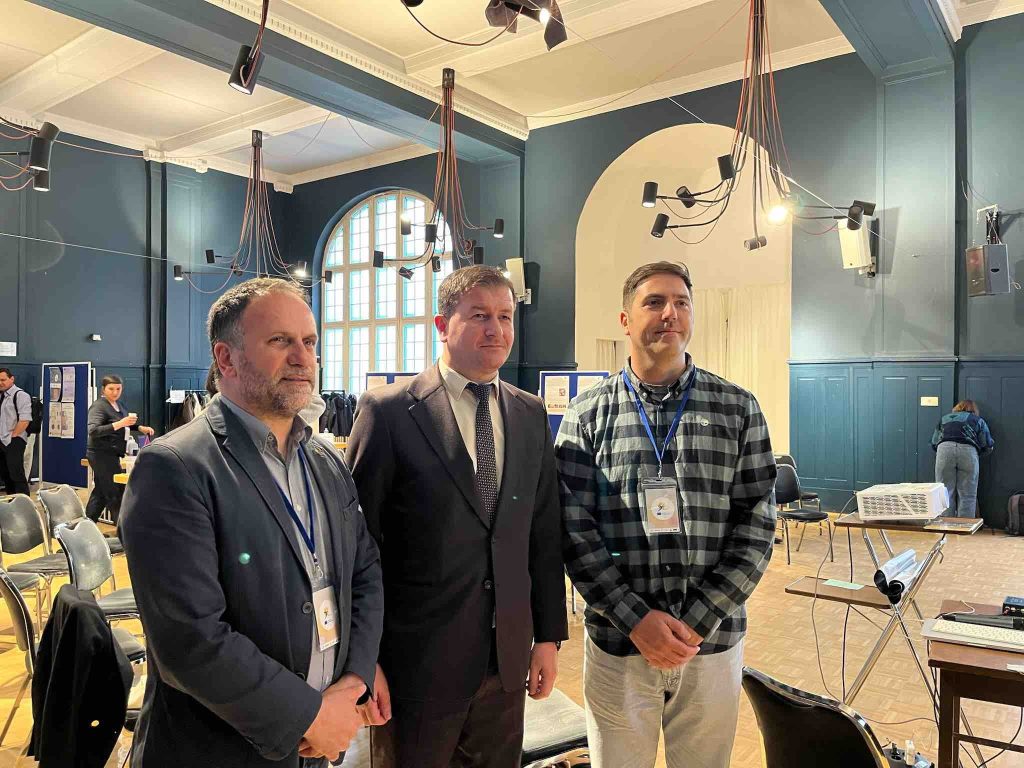
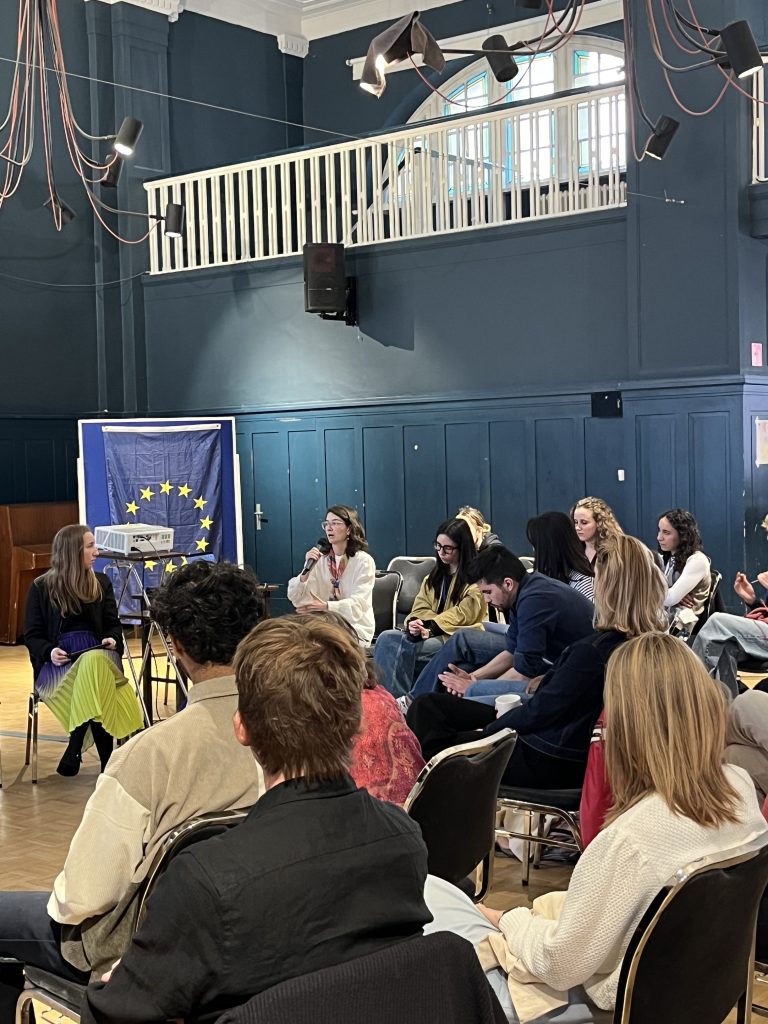
Photo 1 (left): Mariana Matoso presents the Network. Taken by Nela Kłosiewicz
Photo 2 (center): His Excellency Mr. Ylber Sela, Ambassador of the Republic of North Macedonia to the Federal Republic of Germany, honoured the Shared Space, Shared Future conference with his presence and attended the keynote speech delivered by Mr. Bujar Luma, Director of the Center for Balkan Cooperation LOJA. From left to right: Bujar Luma, Ylber Sela, Vele Georgiev. Taken by Nela Kłosiewicz
Photo 3: Fishbowl discussion at the conference. Taken by Nela Kłosiewicz
Looking Ahead: Building Networks, Imagining Futures
The final session of the day brought the focus fully back to where it began — on young people as central actors in peacebuilding. Moderated by Maryna Bykova, the panel Youth Voices in Peacebuilding featured Lila Reshadi, Tobias Glismann, and Chris Rotsakis, three young peacebuilders from different regions and backgrounds who shared personal reflections on what it means to work toward reconciliation in the current European context.
Through an honest and grounded conversation, the speakers discussed the obstacles youth often face when engaging in peace work — from lack of institutional support to growing political apathy and the emotional toll of navigating polarized environments. At the same time, they highlighted spaces of possibility: meaningful mentorship, peer networks, and creative platforms where their work can take root and grow.
The discussion also touched on broader structural dynamics. Panelists reflected on how current debates around rearmament, militarization, and nationalism impact the climate in which youth operate. They called for communities to not only “include” young people in peace processes, but to actively support and fund youth-led initiatives — treating them as equal partners, not symbolic participants.


Photos: Nela Kłosiewicz
In the end, The Missing Peace was not only about tools or outcomes, but about relationships — the kind that take time, care, and intention to grow. What remains are not just deliverables, but the connections, conversations, and trust built along the way. As one participant put it:
“Perhaps the greatest contribution of Erasmus+ is that it gives people a chance to meet, recognize each other, and realize they’re not alone.”
– a participant of the conference
The conference “Shared Space, Shared Future: A Multi-Level Approach to Youth-Led Reconciliation and Social Cohesion” is part of The Missing Peace project, co-funded by the European Union through Leargas – Irish National Agency (Project number: 2022-2-IE01-KA220-YOU-000096690).