
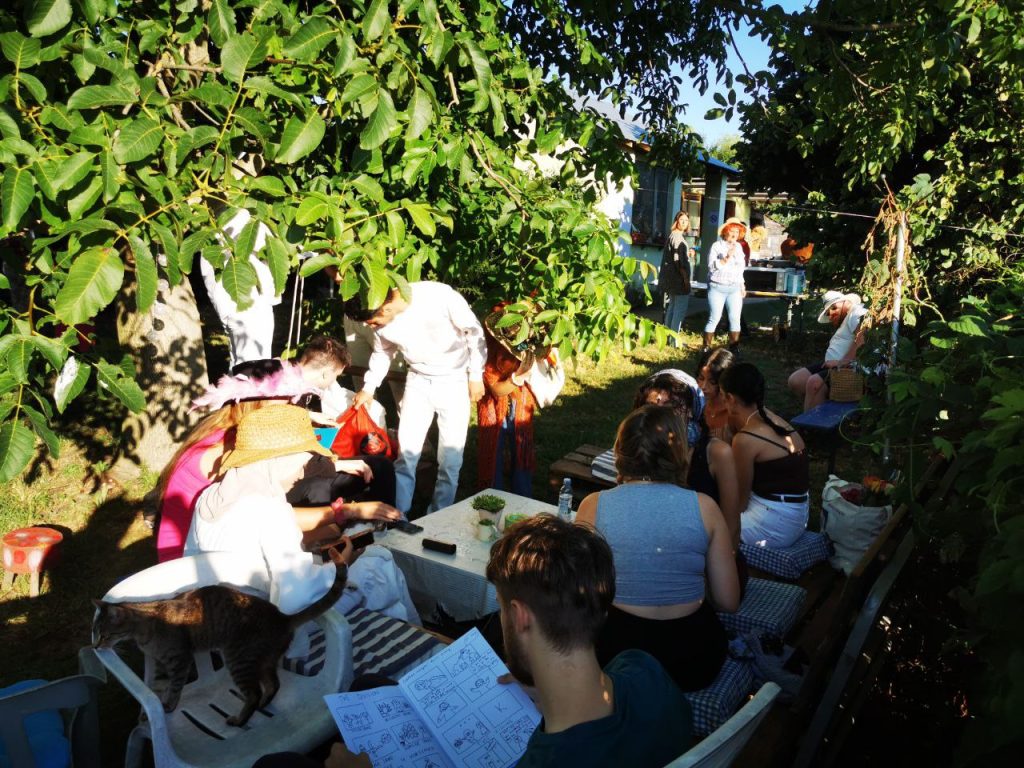
On the last day of May 2025, a small courtyard on Dankó Street in Budapest slowly filled with people carrying notebooks, tote bags and a lot of lived experience of conflict. By 3 p.m., around thirty youth workers, educators, civil society actors and young people had gathered at TEIS’s community space for Hungary’s national Missing Peace multiplier event.
The afternoon opened with a welcome circle and a simple question: “Where does peacebuilding live in your daily work?”This set the tone for an event designed not as a formal conference, but as a meeting point between practice, story and new tools. In the first input, TEIS introduced The Missing Peace: Youth, Peace & Reconciliation project—how six partners have worked across different European contexts, why youth-led reconciliation matters now, and how the Peace by Piece toolkit emerged from years of piloting and reflection.


Photos by Eduard Oganyan.
The heart of the event was a practice block titled “Reconciliation Experienced – Tools for Change.” Here, participants stepped into the kinds of activities that had been tested with young people during the project: dialogue and de-escalation drills, conflict-analysis tools and arts-based reflection methods adapted from the toolkit. Small groups rotated through exercises, then compared notes: What would this look like in a secondary school classroom in Budapest? How might it work with migrant-background youth, or in a mixed community centre group?
After a short break, the focus shifted to the Missing Peace Toolkit & Youth Work Dialogue. The facilitators walked participants through the structure of the publication, highlighting session flows, debrief questions and safeguarding tips that TEIS and other partners had sharpened through repeated pilotings. The room quickly turned into a working lab, with local youth workers mapping which tools could travel directly into their own programmes and which would need adaptation for language, group size or local sensitivities.
As the day moved towards early evening, the event widened its lens. In a dedicated slot, TEIS and Glencree formally launched the Actors of Peace & Reconciliation network—inviting those present to join a growing community of practitioners committed to sharing methods, co-hosting activities and keeping youth voices central in reconciliation work. Participants were able to sign the Memorandum of Understanding on the spot, turning interest into a light but real commitment to stay connected beyond the project’s lifetime.
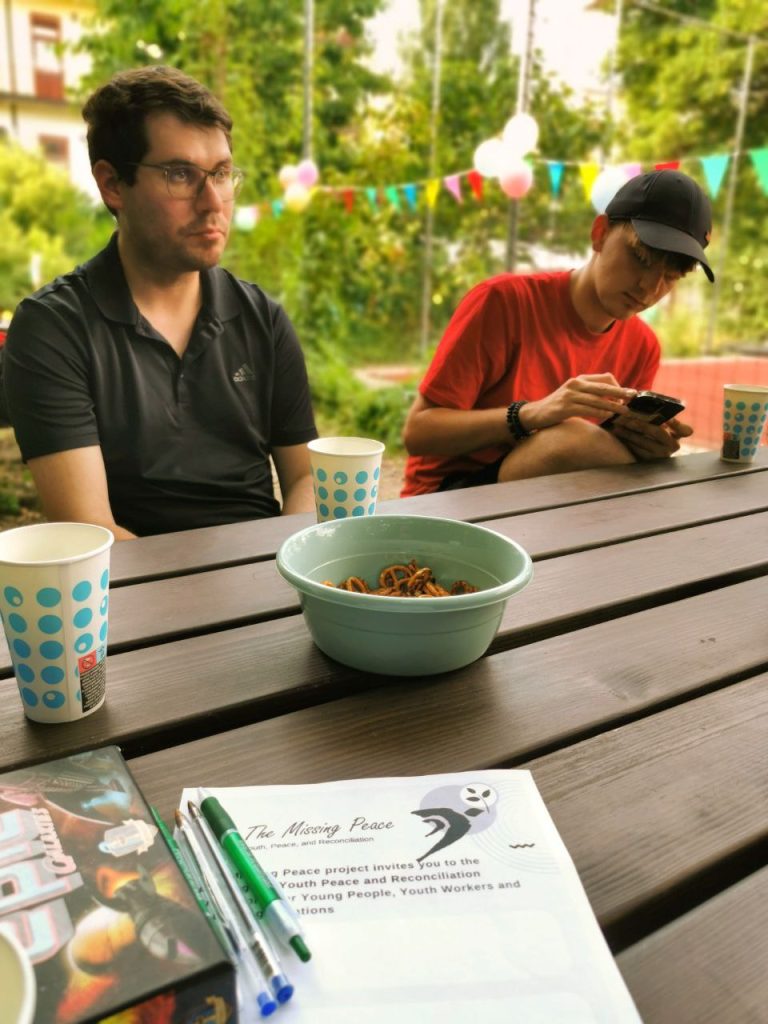
The final part of the programme looked ahead. An Erasmus+ opportunities session unpacked how small organisations, including those working with marginalised or migrant communities, can design their own peace-education projects and exchanges. An open-space Q&A and informal networking rounded off the evening, with clusters of participants sketching ideas on scrap paper, swapping contacts and imagining joint initiatives that could grow out of what they had just experienced.
By the time the room began to empty around 8 p.m., the multiplier had quietly done what it set out to do. It had raised visibility of the project and its resources in Hungary, positioned the toolkit as a practical, adaptable guide for youth work and civic education, expanded participants’ repertoire of reconciliation tools, and seeded new relationships through the freshly launched network. For many in the room, the event was less an ending than a starting point: a moment when peacebuilding shifted from project vocabulary into very concrete plans for workshops, school activities and community encounters across Budapest and beyond.
“The Missing Peace” project is co-funded by the European Union through the Erasmus+ Program (Pr. Nr.: KA220-YOU-055CD22D).
