
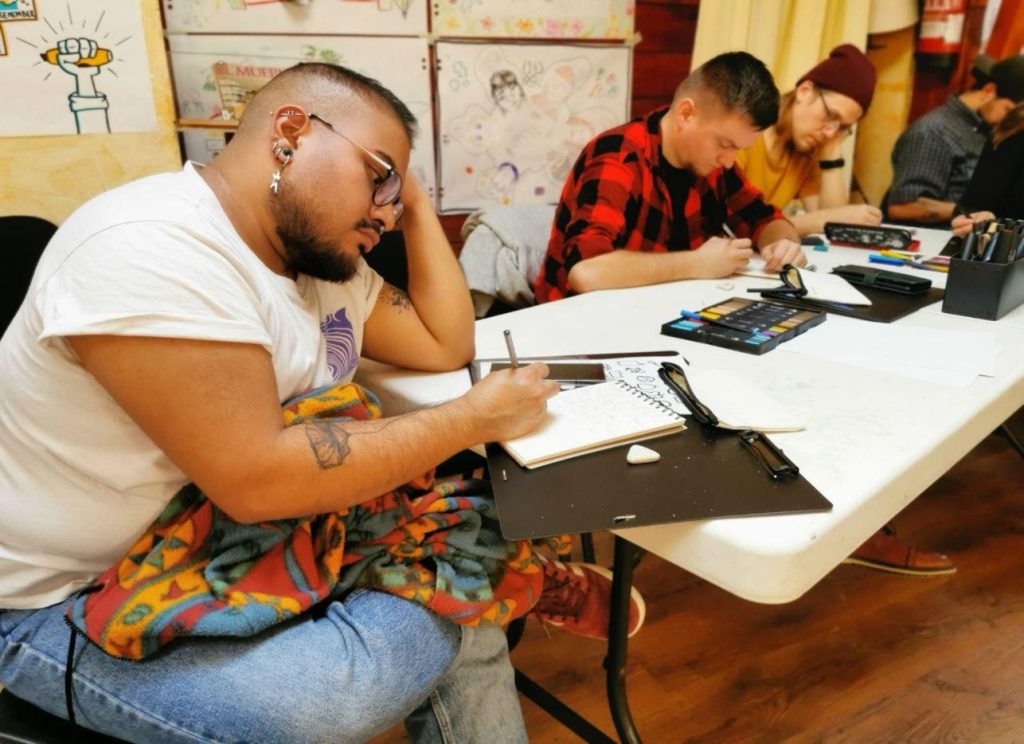
On 11 November 2024, TEIS team carried out its first piloting session for the “Peace by Piece” toolkit, testing the Music for Peace method with 15 participants during a five-hour workshop. Set in a calm, inclusive learning environment, the session offered youth workers, educators, and volunteers an opportunity to explore peace not through definitions or dialogue, but through music, colour, and emotional expression.
“Music for Peace” invites participants to connect with the idea of peace through sensory experience. At the start of the workshop, each participant anonymously contributed one or more songs to a shared playlist. With no pressure to justify their choices, individuals were free to select pieces that resonated with them personally, songs tied to memory, calm, strength, or joy.
As the playlist unfolded, participants were encouraged to paint or draw whatever the music evoked: colours that matched tone, shapes that reflected rhythm, or abstract forms symbolising emotions. This intuitive, non-verbal engagement allowed participants to access a deeper layer of reflection, where peace was felt rather than simply discussed.
The room soon filled with the quiet focus of people translating sound into visual expression, every canvas becoming its own interpretation of peace.

Sharing stories through art
After the creative phase, participants were invited to share their artwork and the reflections behind it. This group discussion was open and voluntary, allowing individuals to contribute at their own pace. Many participants chose to speak, describing how certain melodies stirred memories, how lyrics related to their lives, or how the act of painting helped them understand peace as something internal and emotional.
The artworks were then displayed in a small informal exhibition, creating a collective visual landscape of the group’s interpretations of peace.
Participants’ impressions
Feedback from the piloting was highly positive. Participants described the activity as:
- “powerful and moving,”
- “deeply reflective,”
- “a gentle way to talk about personal feelings,”
- and “a safe space to explore peace without needing perfect words.”
Several people emphasised that Music for Peace helped them connect more empathetically with one another. Others appreciated its meditative quality, noting that the process of painting to music brought calmness, introspection, and a renewed sense of emotional clarity.
The anonymity of the playlist also contributed to a judgement-free space, encouraging authenticity and vulnerability.

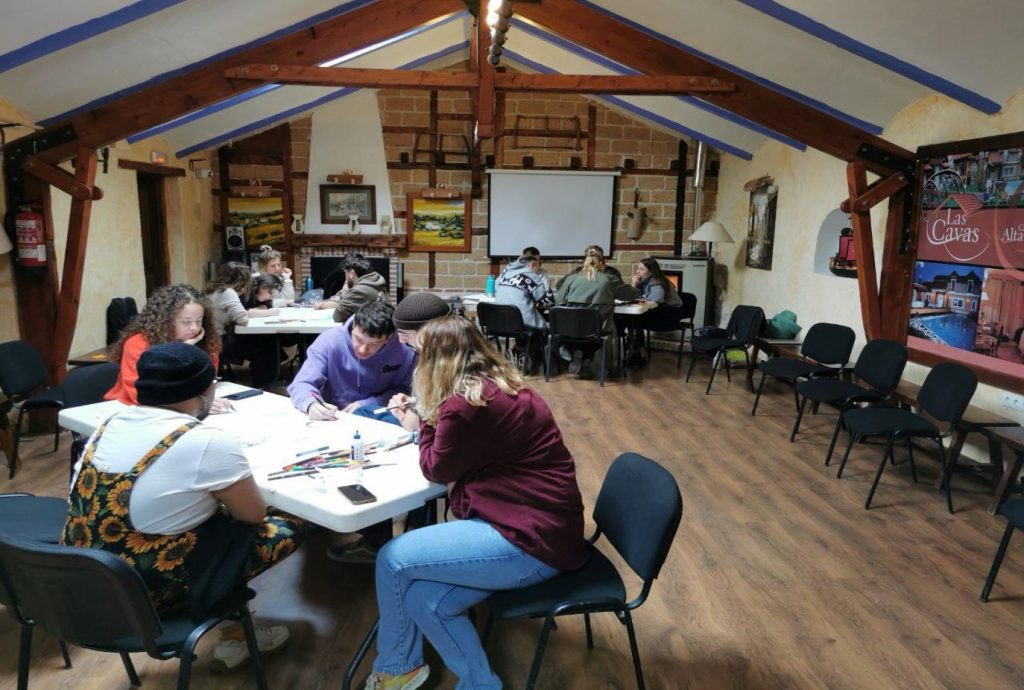

Photo: Eduard Oganyan
Why Music for Peace Matters
This piloting demonstrated that arts-based tools can support meaningful peace education by:
- lowering barriers to participation,
- creating emotional safety,
- fostering self-awareness,
- and strengthening connections between participants.
By centring reflection and shared creativity, TEIS’s piloting confirmed that Music for Peace is a powerful pathway into exploring peace as both an inner experience and a collective process.
“The Missing Peace” project is co-funded by the European Union through the Erasmus+ Program (Pr. Nr.: KA220-YOU-055CD22D).

Reference:
- The Missing Peace – WP4.A3. – Piloting reports.