

Between May 22-29 in 2023, young people from across Europe travelled deep into the forests of southern Lithuania to take part in The Missing Peace Youth Exchange – an immersive week of learning, connection, and creative peacebuilding. Hosted in the quiet village of Merkinė, the exchange brought together 25 participants eager to explore what youth-led reconciliation and community building can look like in practice.
From the first day, the natural setting shaped the group’s journey. Surrounded by woods, cabins, and open space, participants stepped away from daily routines and into a shared environment of reflection and presence. Over the course of the week, two facilitators guided them through exercises using movement, music, storytelling, and even Lego to examine how conflict shows up in our lives, and how young people can shape cultures of peace.
Exploring Ourselves as Peacebuilders
Early sessions focused on the personal dimension of peacebuilding: what each participant brings to the process. Through experiential tools, the group explored skills such as active listening, compassion, emotional awareness, and the sensations of conflict in the body. These practices helped crystallise the idea that peace work begins with self-awareness and empathy – foundational skills for any young leader working with divided communities.
The Glencree Centre for Peace and Reconciliation also brought three members of its All-Island Women’s Peacebuilding Network to the exchange, offering valuable perspectives on gender, lived experience, and the role of young women in peace processes. Their voices reinforced the project’s commitment to inclusive, intergenerational participation.

Connecting Through Creativity and Community
As trust deepened in the group, the exchange moved toward collective exploration. Participants experimented with artistic methods, such as creative writing, drawing, meditation design, and visual storytelling, to express experiences of conflict, identity, and community. The creative outputs were powerful: gratitude-focused meditations, comics illustrating the dangers of “us vs. them” narratives, and prose capturing the grief and silence carried by communities affected by violence.
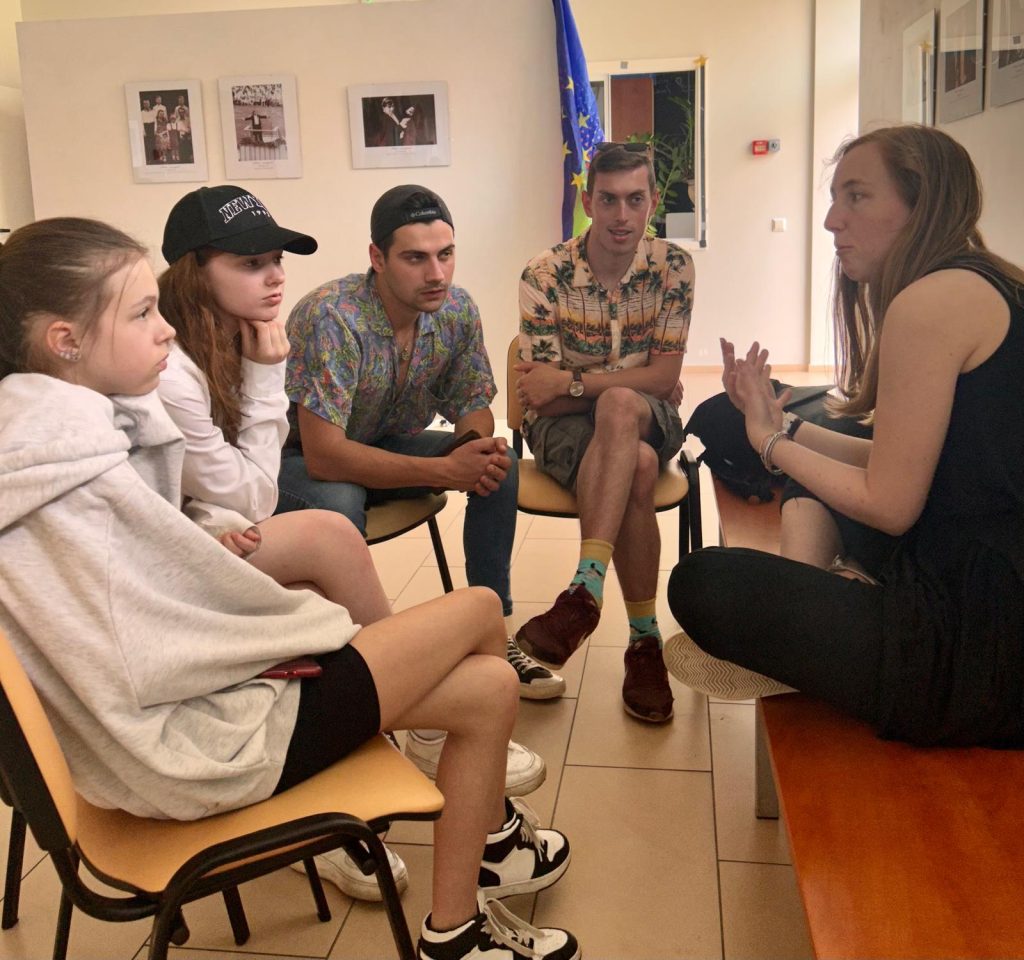


Photos by Carla Molteni & Robert Nesirky.
One highlight was the Human Library event in the Merkinė Cultural Centre. Participants became “living books,” sharing their initiatives and stories with local residents. This exchange promoted mutual understanding between the visiting youth and the Lithuanian community, demonstrating how simple, humane encounters can dismantle stereotypes and create space for authentic connection.
The cultural exchange continued into the evening with Lithuanian folk dance and song, creating moments of joy, curiosity, and cross-cultural appreciation.
From Local Actions to Global Peace
In the final days, the group explored what peace means beyond personal and local contexts. What responsibilities do young people carry? What small actions can contribute to global peacebuilding efforts? Guided by facilitators, participants translated their reflections into creative outputs that highlighted collective responsibility and the ripple effects of everyday peace work.
By the end of the week, participants left Merkinė with stronger friendships, a clearer understanding of reconciliation across Europe, and renewed motivation to continue peacebuilding work in their own communities. Many described the experience as transformative – both personally and politically.
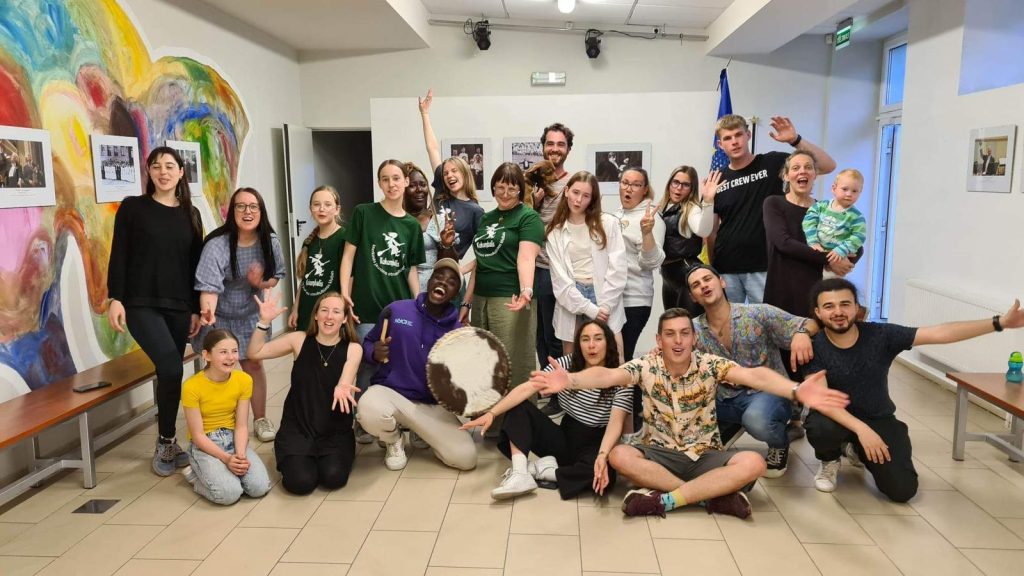
A group photo of the participants by VKC.
Impact of the Youth Exchange: What Participants Shared
Based on the evaluation data gathered after the activity, several strong impact patterns emerged. These themes reflect the learning indicators and participant self-assessments outlined in the project’s Impact Evaluation Matrix.
- Increased knowledge and skills in peacebuilding
A majority of participants reported a significant increase in their understanding of conflict, reconciliation, and youth-led peacebuilding approaches. Experiential sessions were particularly noted as effective at deepening learning.
- Personal growth and confidence
Participants highlighted improved self-awareness, better communication skills, and increased confidence to speak, facilitate, or engage in peace-related initiatives. Many described the week as an important step in their personal development as young leaders.
- Strengthened intercultural competences
Interacting with peers from different countries helped participants expand their perspectives, challenge assumptions, and build intercultural empathy—key competencies for working in diverse communities.
- Sense of belonging and emotional connection
The forest setting, shared living environment, and creative processes helped cultivate trust and emotional safety. Participants repeatedly mentioned feeling connected, supported, and “part of something bigger.”
- Motivation to continue peace work
Evaluations show high levels of inspiration and readiness to apply learned methods in local contexts—aligning directly with the project’s goal of cultivating young peace multipliers.
- High satisfaction with the overall exchange
Most participants assessed the exchange as exceeding or fully meeting their expectations, with a strong satisfaction rate regarding facilitation, activities, and group dynamics.
For me as someone who has no experience in peace and conflict based youth work, this exchange was super interesting […]. Even thought I wasn’t able to contribute as much, hearing everyone else’s perspectives and work experiences was very fascinating to me. I know have a better idea of how I can incorporate some of their practices into my own youth work in the future.
– Participant of the Youth Exchange in Merkinė.
Closing Reflection
The Merkinė Youth Exchange exemplifies what The Missing Peace seeks to achieve: empowering young people to understand conflict, connect across borders, and build the foundations for reconciliation in their local and global communities. Through creativity, dialogue, and shared experience, the exchange strengthened the participants’ capacity to carry peace forward—one relationship, story, and action at a time.
“The Missing Peace” project is co-funded by the European Union through the Erasmus+ Program (Pr. Nr.: KA220-YOU-055CD22D).

Reference:
- The Missing Peace – Youth exchange in Merkine (Lithuania). Evaluation form.
- Glencree Centre for Peace and Reconciliation. Blogpost: The Missing Peace Consortium – Youth Exchange, Lithuania (link).